

About our block driveways service
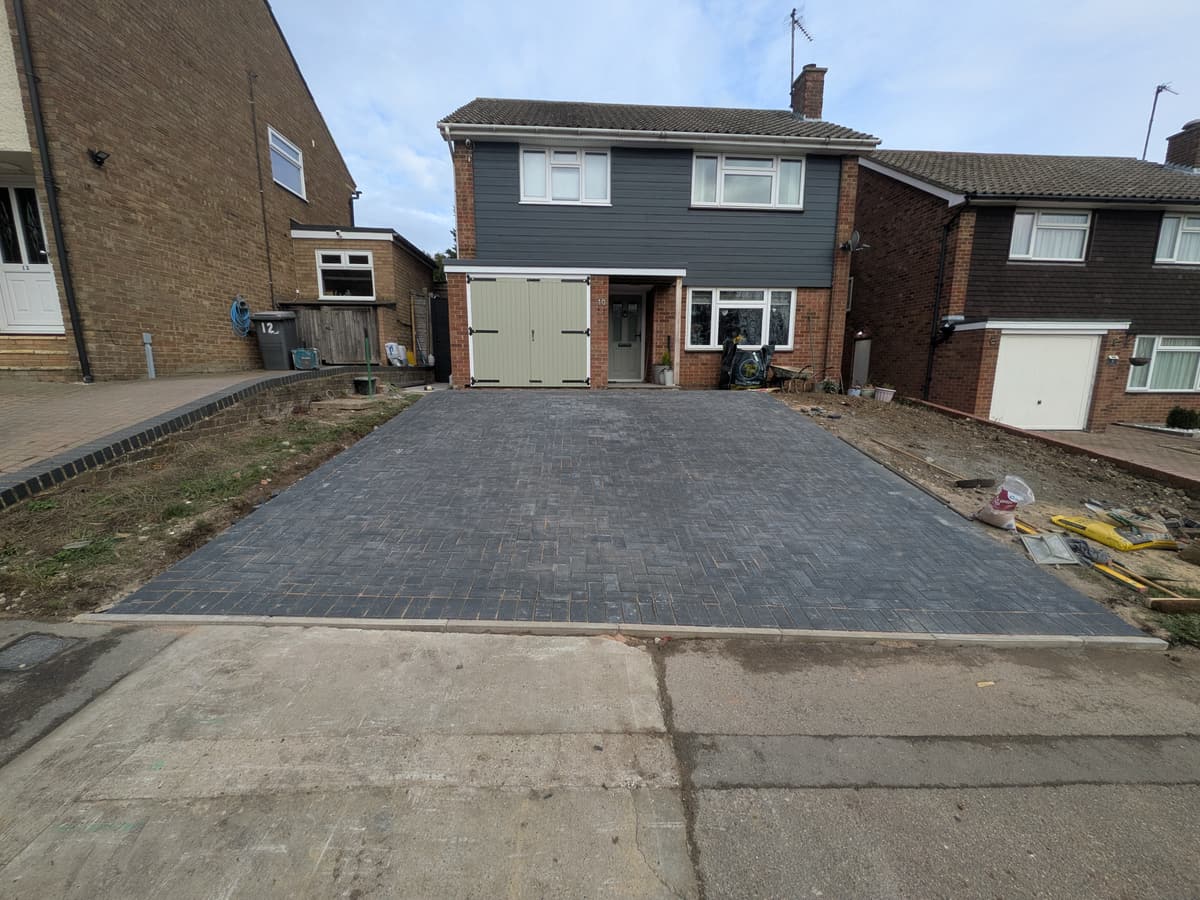
Amber Brickworks & Landscapes installs block paving driveways in Haverhill, Suffolk and within about 20 miles. We dig out the old surface, build a compacted sub-base, set solid edge restraints and lay the blocks in an interlocking pattern, with drainage planned from the start.
A block paved driveway is a layered structure, and most of it is out of sight. The blocks are the last few centimetres. What stops a drive from sinking, rutting or spreading is the excavation depth, the sub-base and the edges, so that is where we put the effort.
What we do
- New block paving driveways
- Replacing concrete, tarmac and gravel drives
- Widening and extending existing driveways
- Permeable block paving
- Borders, patterns and contrasting details
- Kerbs and edge restraints
- Drainage channels and soakaways
- Steps, paths and front walls to match
Quick facts
Quick fact
The sub-base
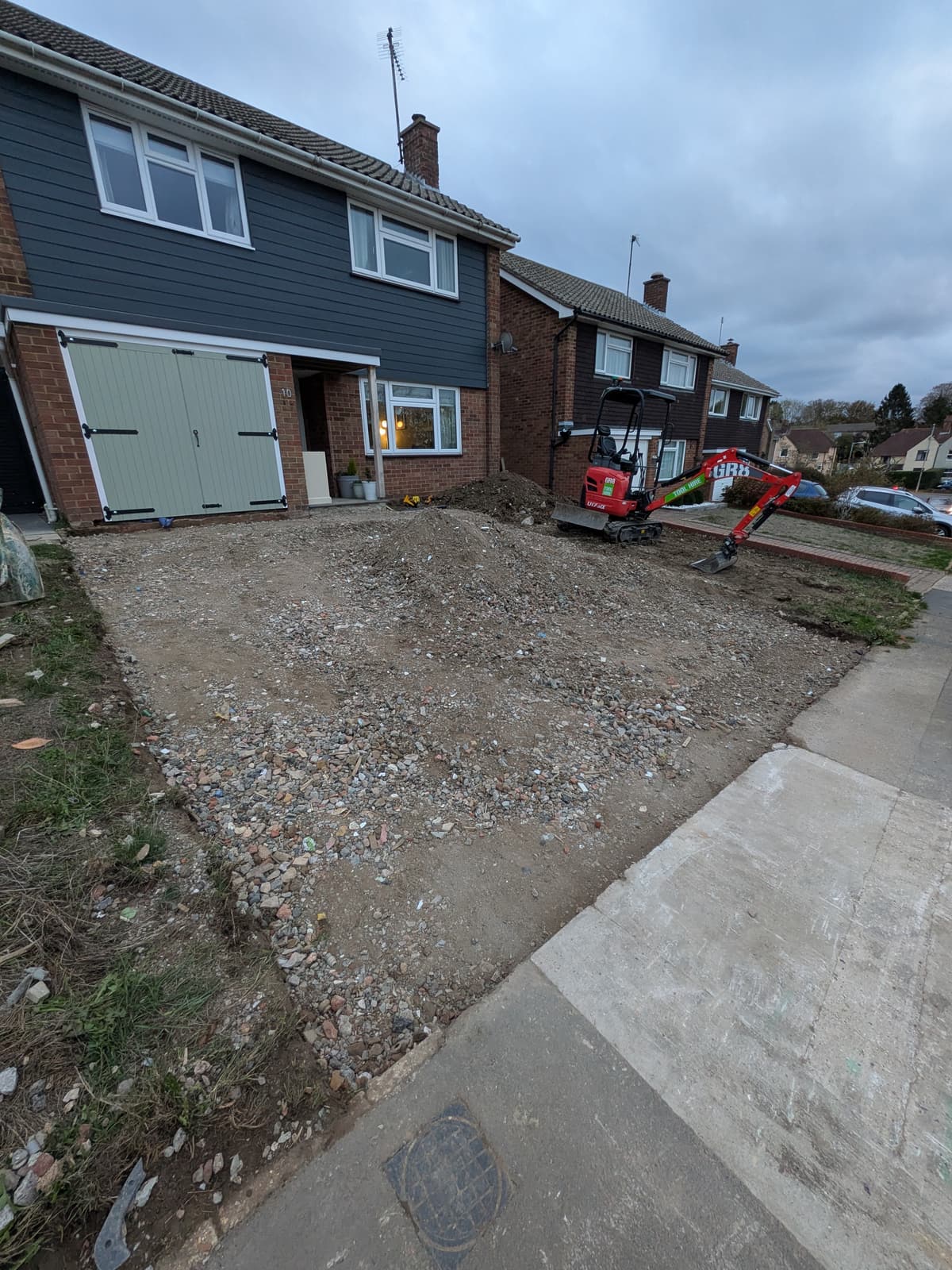
The sub-base is the layer of crushed stone beneath a driveway, usually a graded aggregate known as MOT Type 1. It is spread in layers and compacted with a vibrating plate.
It spreads the weight of vehicles into the ground. For a domestic driveway it is typically 100 to 150 mm deep, and deeper on soft or clay ground.
A thin or poorly compacted sub-base is the main cause of dips and tyre ruts.
Quick fact
Permeable paving and planning
Since 2008, paving over more than 5 square metres of a front garden in England needs planning permission unless the rainwater is dealt with on your own land.
You do not need permission if the surface is permeable, such as permeable block paving or gravel, or if it drains to a lawn, border or soakaway within your boundary.
Permeable block paving has wider joints filled with fine grit over an open-graded sub-base, so rain soaks through instead of running into the road.
Quick fact
Dropped kerbs
To drive across a pavement or verge you need a dropped kerb, also called a vehicle crossover. Using a drive without one is an offence and can damage services under the footpath.
You apply to the highway authority, which is the county council: Suffolk, Cambridgeshire or Essex depending on where you live. They set the specification and approve who can build it.
If you are widening a drive, the existing dropped kerb may need extending too.
Quick fact
Laying patterns
Herringbone is the strongest pattern for driveways. Each block is locked by its neighbours in two directions, so the surface resists the twisting forces of turning tyres.
It can be laid at 45 or 90 degrees to the house. Stretcher bond and basket weave suit paths and patios but can creep under vehicles.
Built in layers
From the bottom up: firm, excavated ground; a compacted sub-base; a screeded bed of sharp sand; the blocks; and kiln-dried sand vibrated into the joints to lock everything together.
For a domestic drive the blocks are usually 50 mm thick, with 60 mm blocks where heavier vehicles are expected.
Edges that hold
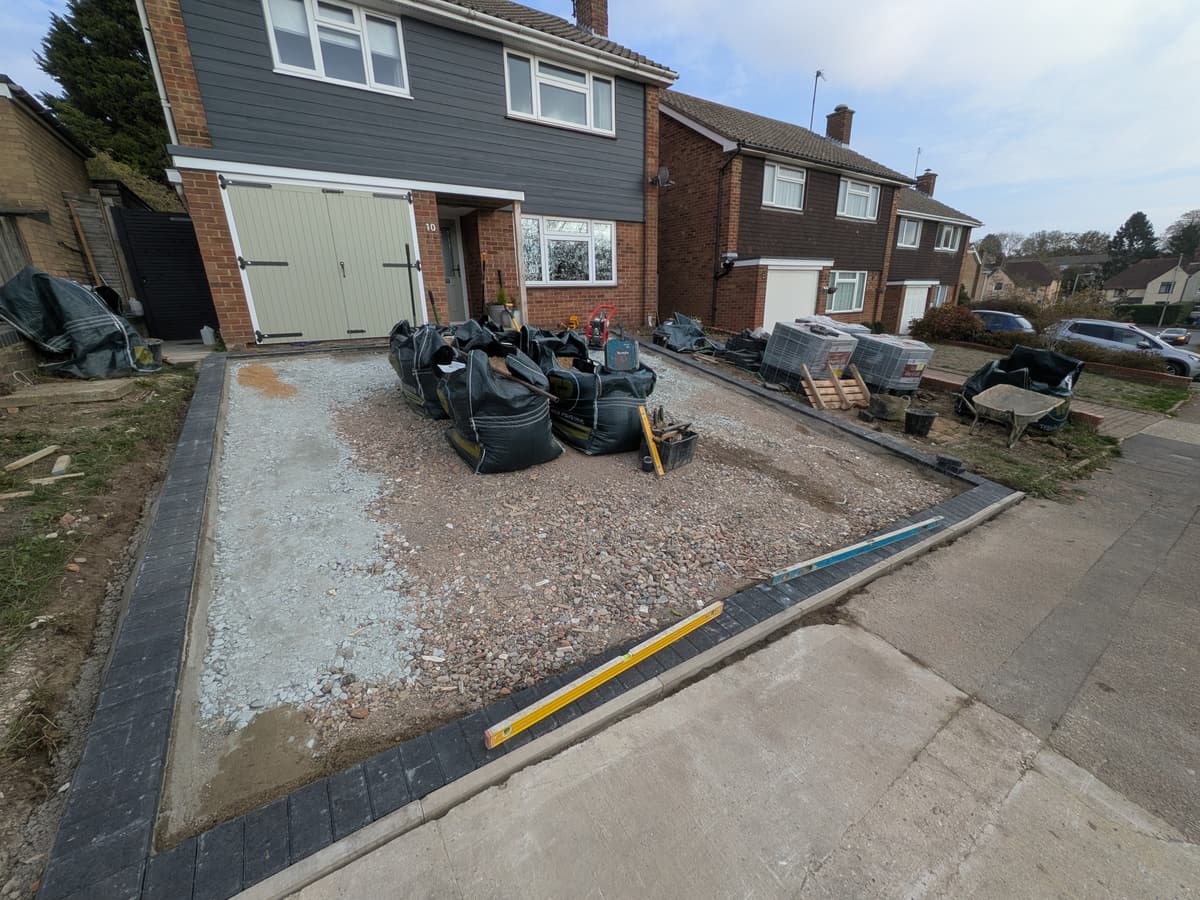
Block paving relies on being held tight at the edges. We set kerbs or a border course in concrete around the whole perimeter before the main area is laid. Without firm restraints, blocks spread, joints open and the surface loosens.
Widening and extending
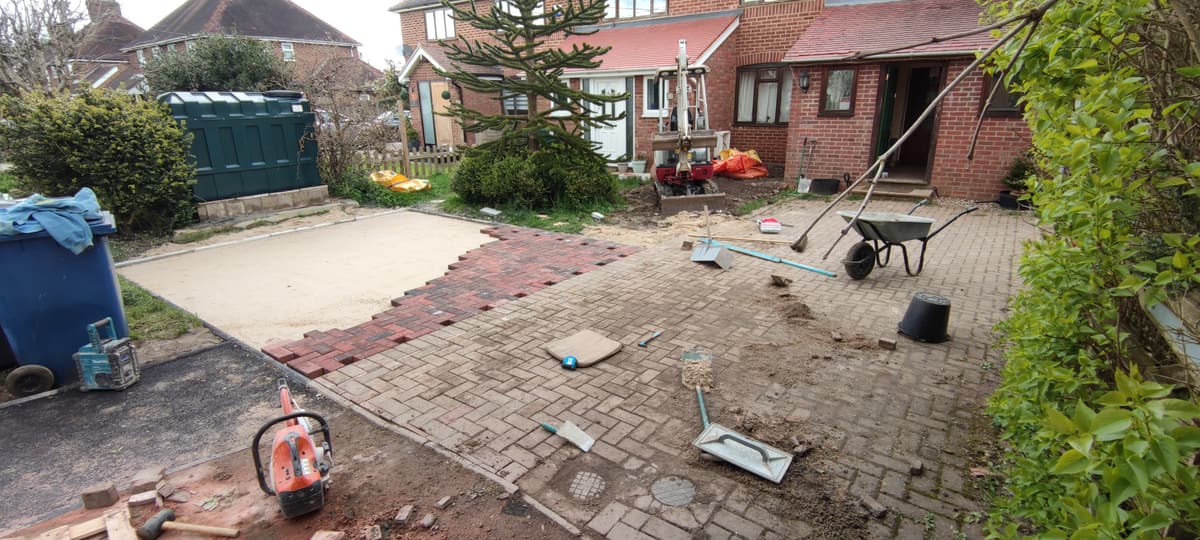
Many driveways were built for one car. We extend existing block paving by toothing new blocks into the old pattern so there is no straight joint to show the join, and can resurface the crossover at the same time.
Step by step
How a driveway is built
Excavate
The old surface, turf and soft ground are dug out to a consistent depth.
Sub-base
Crushed stone is laid and compacted in layers to the correct levels and falls.
Edges and bedding
Kerbs and borders are set in concrete, then sharp sand is screeded level.
Lay, cut and joint
Blocks are laid, cut in at the edges, compacted and jointed with kiln-dried sand.
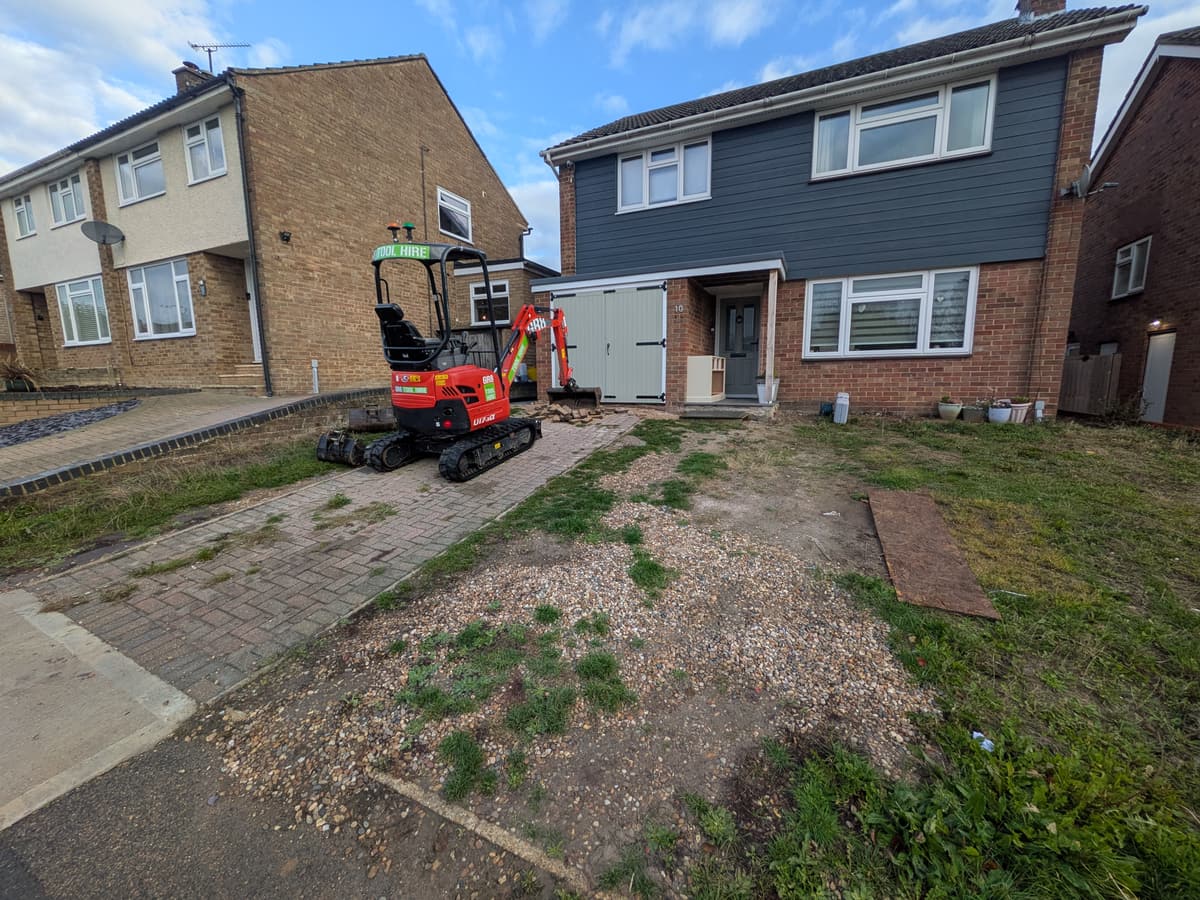
Before & after
Block Driveways in practice
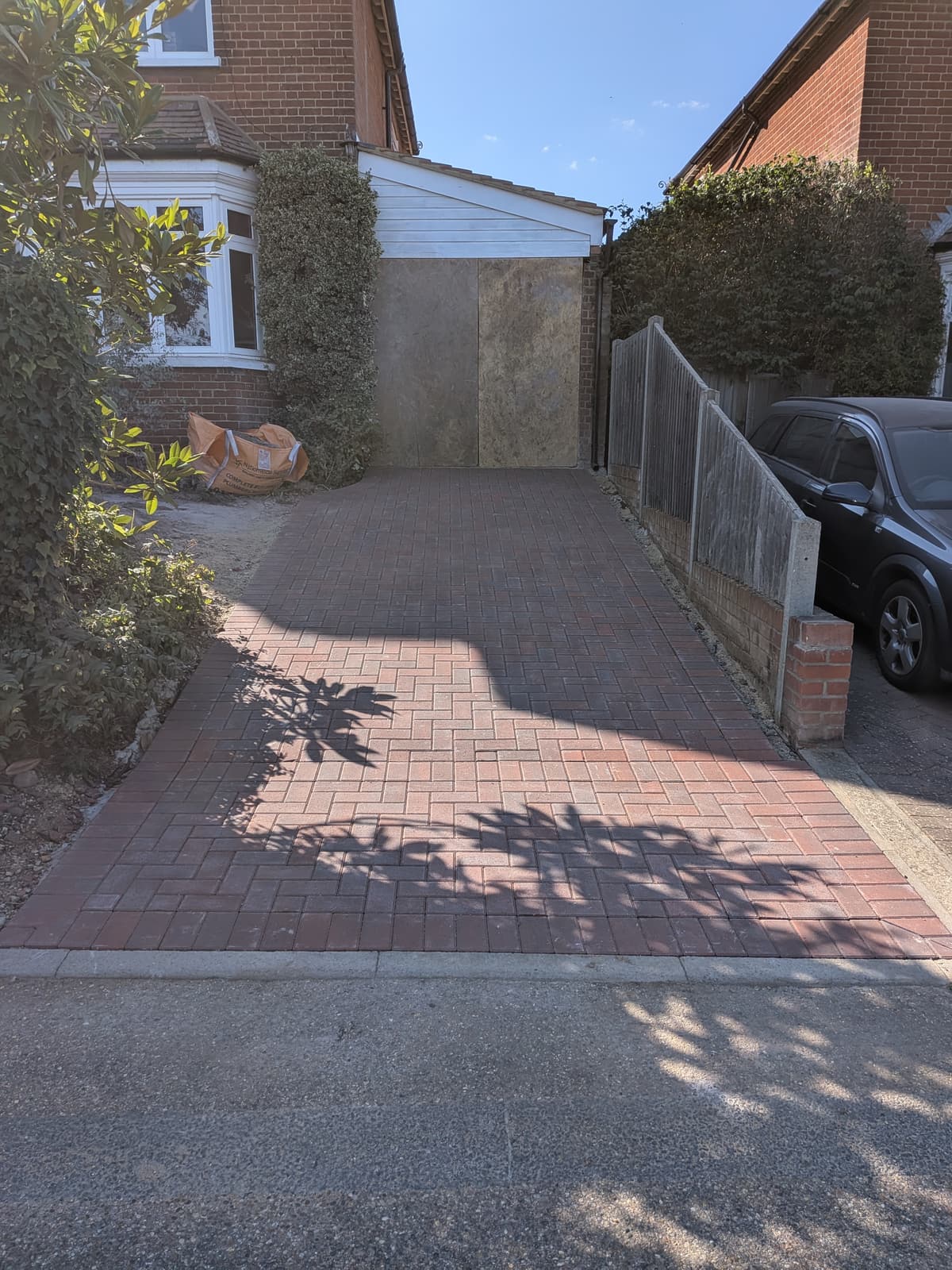
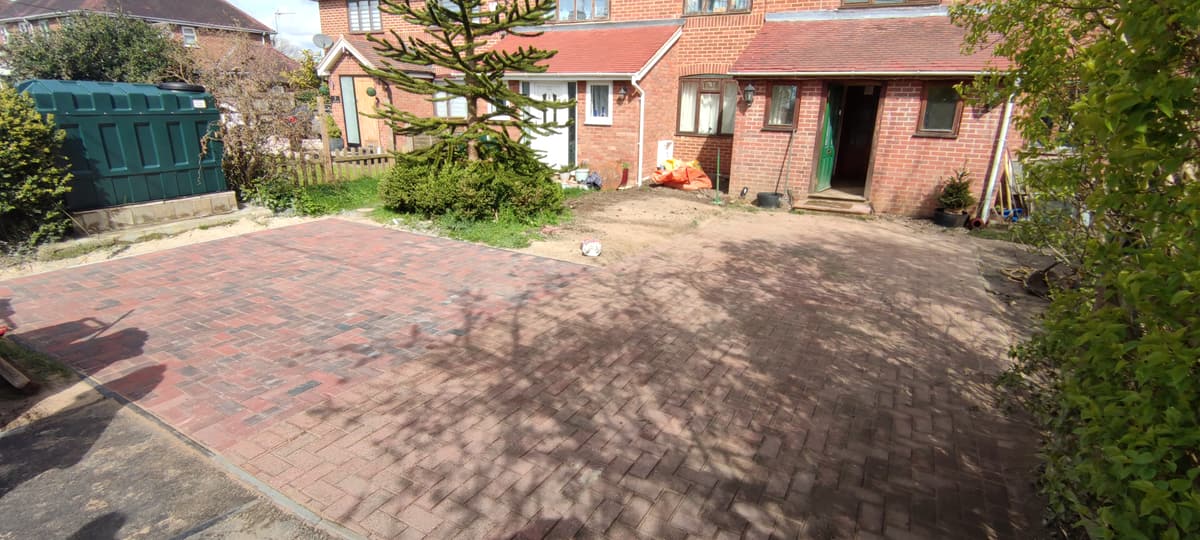
We photograph jobs at each stage so you can see the preparation as well as the finish. Follow this one from start to end on its project page.
Questions
Block Driveways: common questions
How long does it take to lay a block paving driveway?
It depends on the size and ground conditions. The full-width charcoal driveway on our projects page was photographed from the first day of digging to the finished surface over nine days. Smaller drives take less. We give an expected programme with every quote.
Do I need planning permission for a new driveway?
Not if the surface is permeable, or if it drains to a border, lawn or soakaway within your property. Paving more than 5 square metres of front garden with an impermeable surface that drains to the road does need permission. A new or wider dropped kerb needs separate approval from the county council.
How deep do you dig for a driveway?
Typically 200 to 250 mm below the finished level, to allow for a 100 to 150 mm sub-base, the sand bed and the blocks. On clay or soft ground we go deeper. We assess the ground before quoting.
How long does block paving last?
Laid on a properly compacted sub-base with sound edges, concrete block paving commonly lasts 20 years or more. Individual blocks can be lifted and relaid if services need to be reached or a block is damaged, which is an advantage over tarmac and concrete.
Can you match and extend my existing block paving?
Often. If the original block is still produced we use the same one. New blocks look brighter at first and tone down as they weather. Where a match is not available, a contrasting border between old and new makes the join look intentional.
How do I look after block paving?
Sweep it, remove weeds before they establish and top up the jointing sand if it washes out. Avoid aiming a pressure washer directly into the joints, as it removes the sand that locks the blocks together.
Where we work
Block Driveways near you
We are based in Haverhill and cover the towns and villages within about 20 miles.
Get a quote
Planning a new driveway?
Call Andrew Martin or send a few details and photos, and we will arrange a visit to look at the job and give you a written quote.
07876 762956