

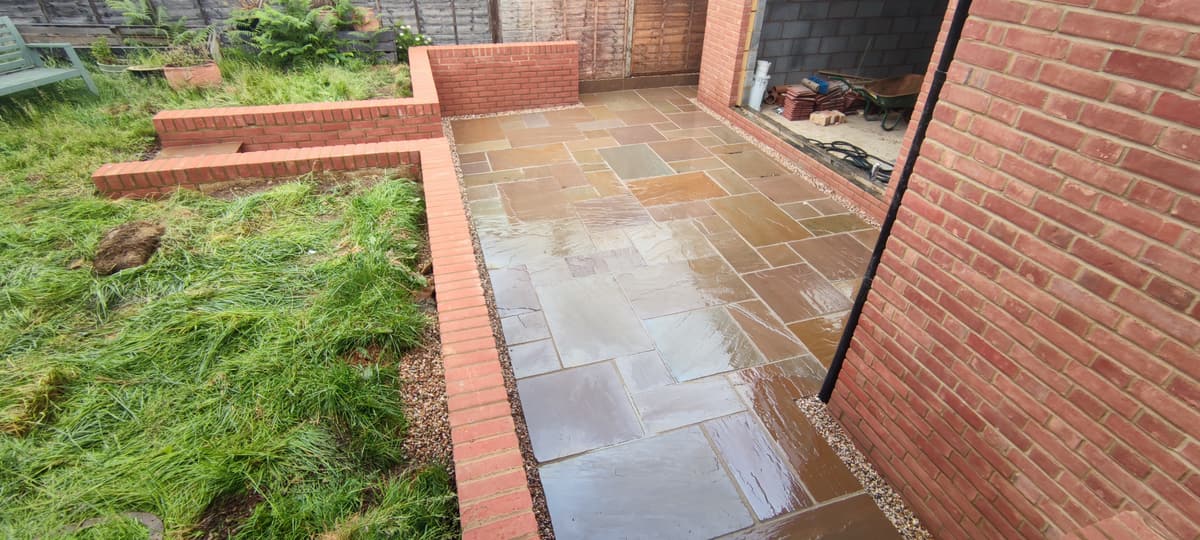
About our landscaping service
Amber Brickworks & Landscapes carries out hard landscaping for gardens in Haverhill, Suffolk and within about 20 miles: patios in natural stone and porcelain, paths, steps, retaining walls, gravel areas, raised beds and ground preparation for lawns.
Hard landscaping is the structure of a garden. Get the levels, drainage and foundations right and the surface stays flat and dry for decades. Because we are bricklayers as well as landscapers, the walls, steps and paving on a job are built by the same people to the same standard.
What we do
- Patios in Indian sandstone, limestone and porcelain
- Garden paths and side paths
- Steps in brick, stone and timber sleepers
- Brick and sleeper retaining walls
- Split-level and terraced gardens
- Gravel areas over weed-control membrane
- Raised beds and brick planters
- Levelling and ground preparation for turf
Quick facts
Quick fact
Porcelain vs natural stone
Porcelain paving is manufactured, so every slab is consistent in size and colour. It absorbs almost no water, resists staining and algae, and is easy to clean.
Natural stone such as Indian sandstone varies from slab to slab and weathers over time, which many people prefer. It is more porous, so it benefits from occasional cleaning.
Porcelain must be laid on a full mortar bed with a priming slurry on the back of each slab, or it will not bond.
Quick fact
Falls and drainage
A patio should never be dead level. It is laid with a slight fall, typically around 1 in 60 to 1 in 80, so rainwater runs off rather than pooling.
The fall is directed away from the house, towards a lawn, border or drainage channel.
Quick fact
Paving and the damp-proof course
The damp-proof course (DPC) is a waterproof layer built into the walls of a house, usually visible as a thicker mortar joint near the ground.
Finished paving should sit at least 150 mm, about two brick courses, below the DPC. Any higher and rain can splash above it or bridge it, leading to damp inside.
Where levels make that impossible, a drainage channel or gravel margin against the wall is the usual answer.
Quick fact
Retaining walls
A retaining wall holds back soil where the ground changes level. It is what makes a level patio or lawn possible on a sloping plot.
Soil is heavy, especially when wet, so a retaining wall needs a proper footing, enough thickness for its height and drainage behind it so water pressure cannot build up. Higher walls may need an engineer’s design.
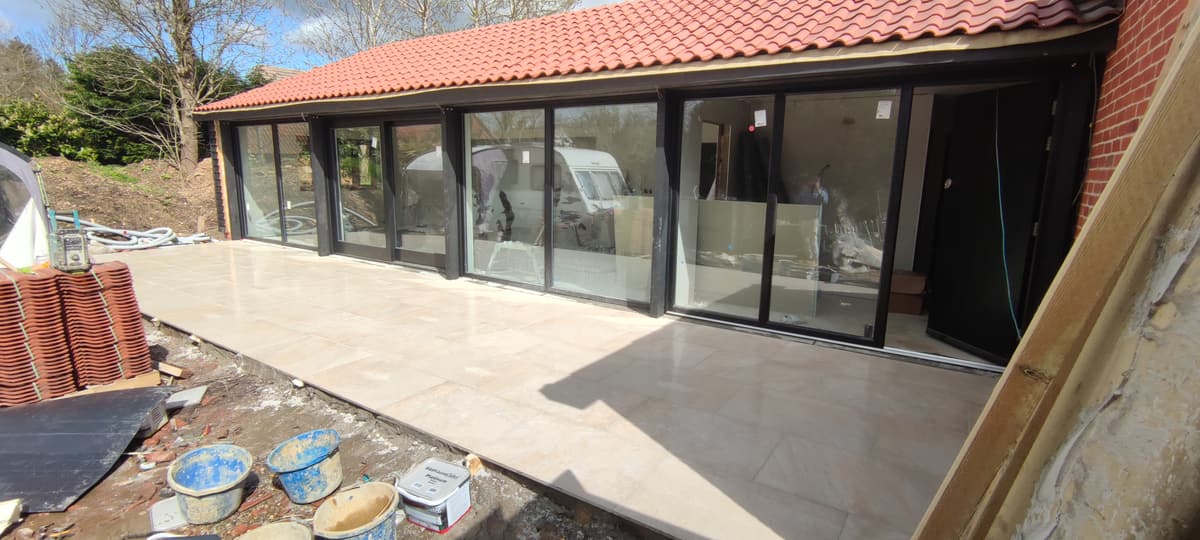
Patios and terraces
A patio is only as good as what is underneath it. We excavate to firm ground, lay and compact a sub-base, then bed each slab fully on mortar so there are no voids to rock or crack.
On large-format porcelain we use levelling clips to keep neighbouring slabs flush and spacers to keep every joint the same width.
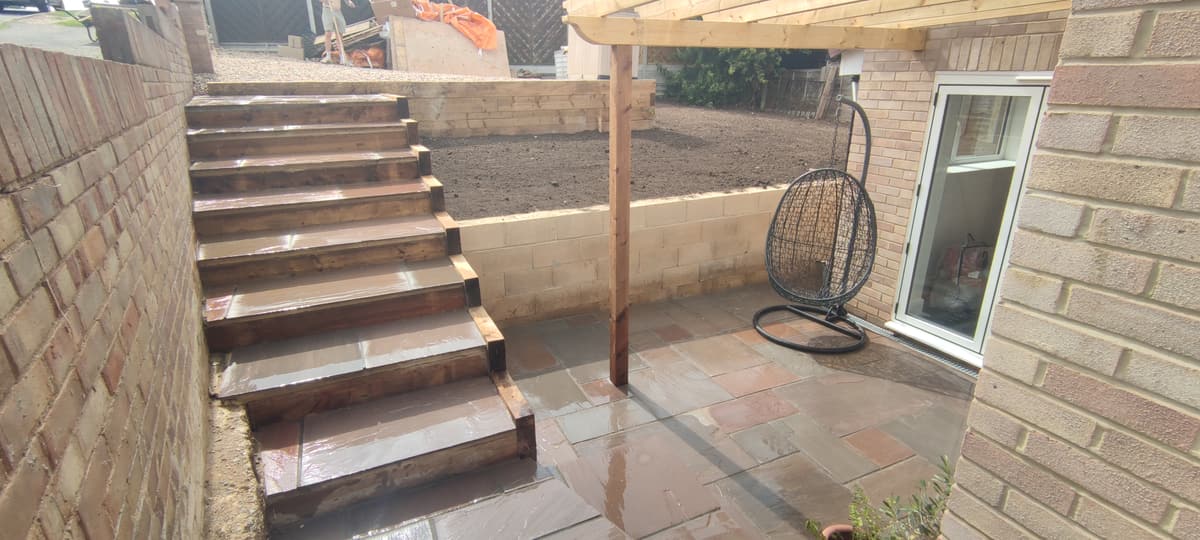
Levels, steps and retaining walls
Sloping gardens work best in levels. We cut and fill to create flat areas, retain the ground with brick walls or timber sleepers, and link the levels with steps that are comfortable and consistent to walk on.
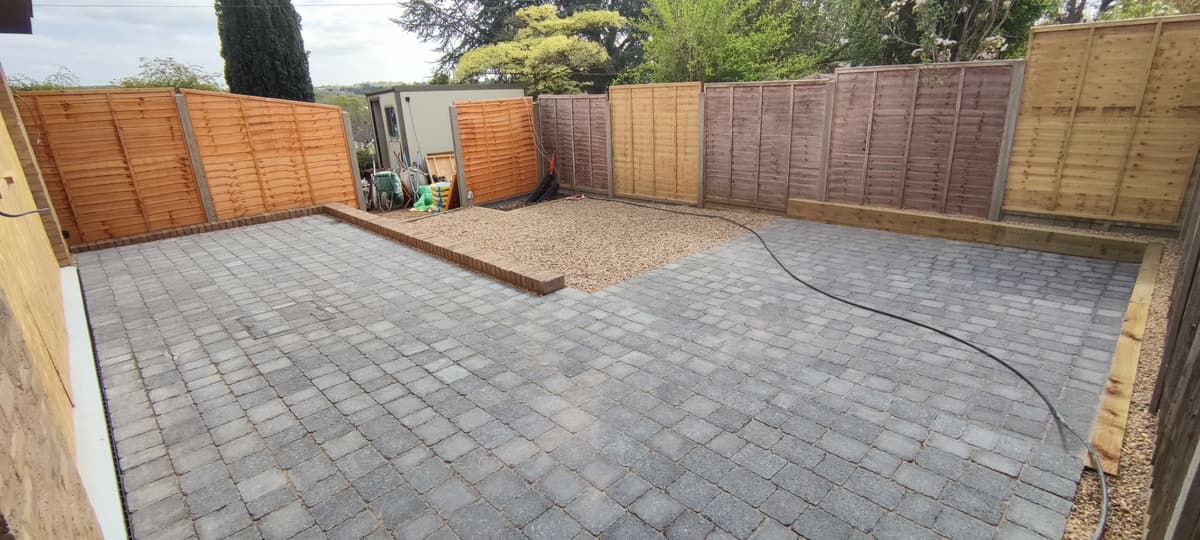
Paths, gravel and lawn preparation
Side paths, gravel areas and block-paved gardens cut down on maintenance. Gravel is laid over a membrane that lets water through and keeps weeds down, with firm edging to hold it in place.
Where a new lawn is planned, we clear, level and rake the ground so it is ready for turf or seed.
Step by step
How a patio is built
Set out and dig
Levels and falls are worked out from the house, then the area is excavated to firm ground.
Sub-base
Crushed stone is laid and compacted to give a stable, free-draining base.
Laying
Slabs are bedded on a full mortar bed, primed on the back where needed, to line and fall.
Jointing
Joints are filled with a suitable jointing compound and the paving is cleaned down.
Before & after
Landscaping in practice
We photograph jobs at each stage so you can see the preparation as well as the finish. Follow this one from start to end on its project page.
Projects
Recent landscaping work
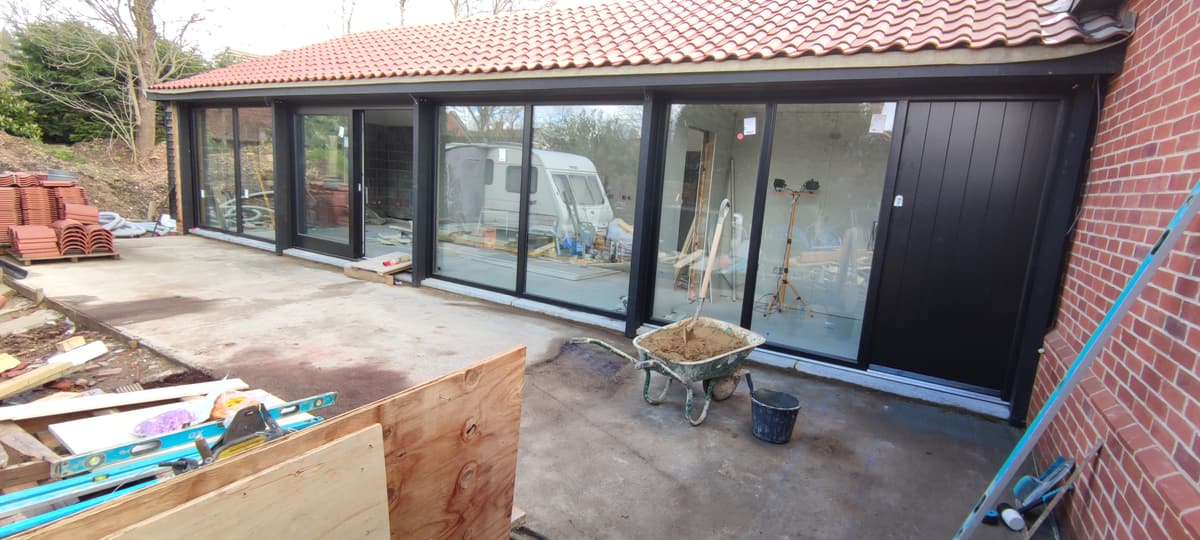
Garden building brickwork and porcelain patio
January to April 2024
View the story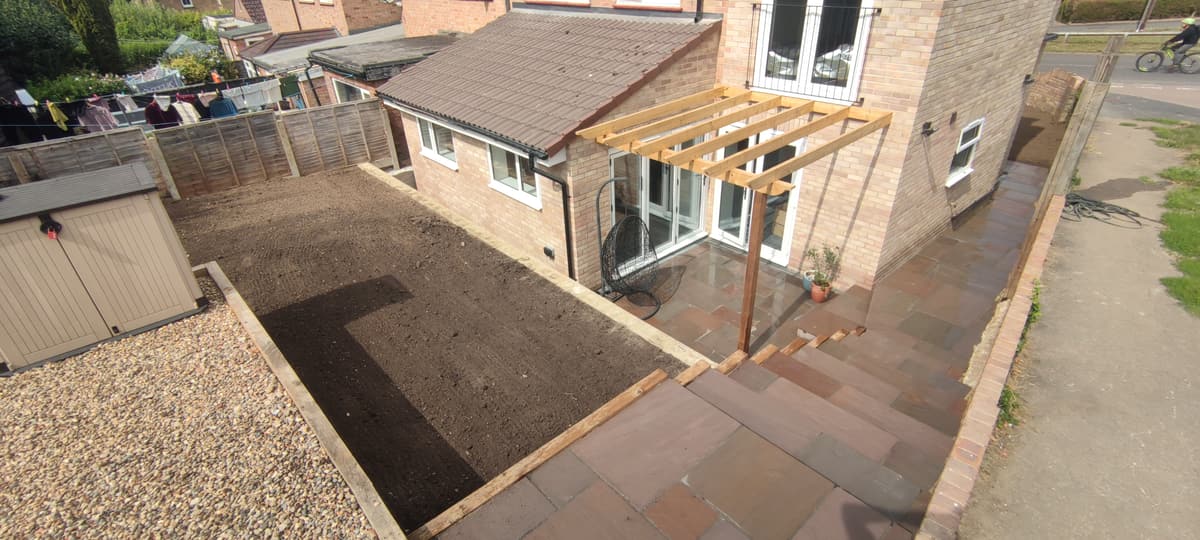
Front and rear garden landscaping
August 2024
View the storySandstone patio with brick retaining walls
June 2025
View the story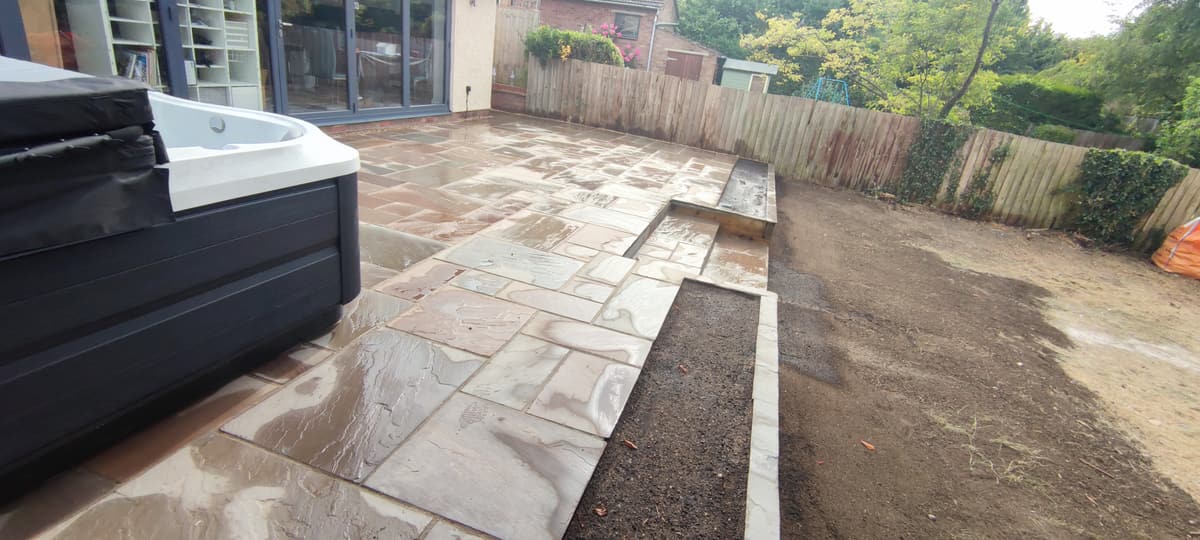
Sandstone patio and side path
May to June 2025
View the storyBlock paved and gravel garden
April 2025
View the story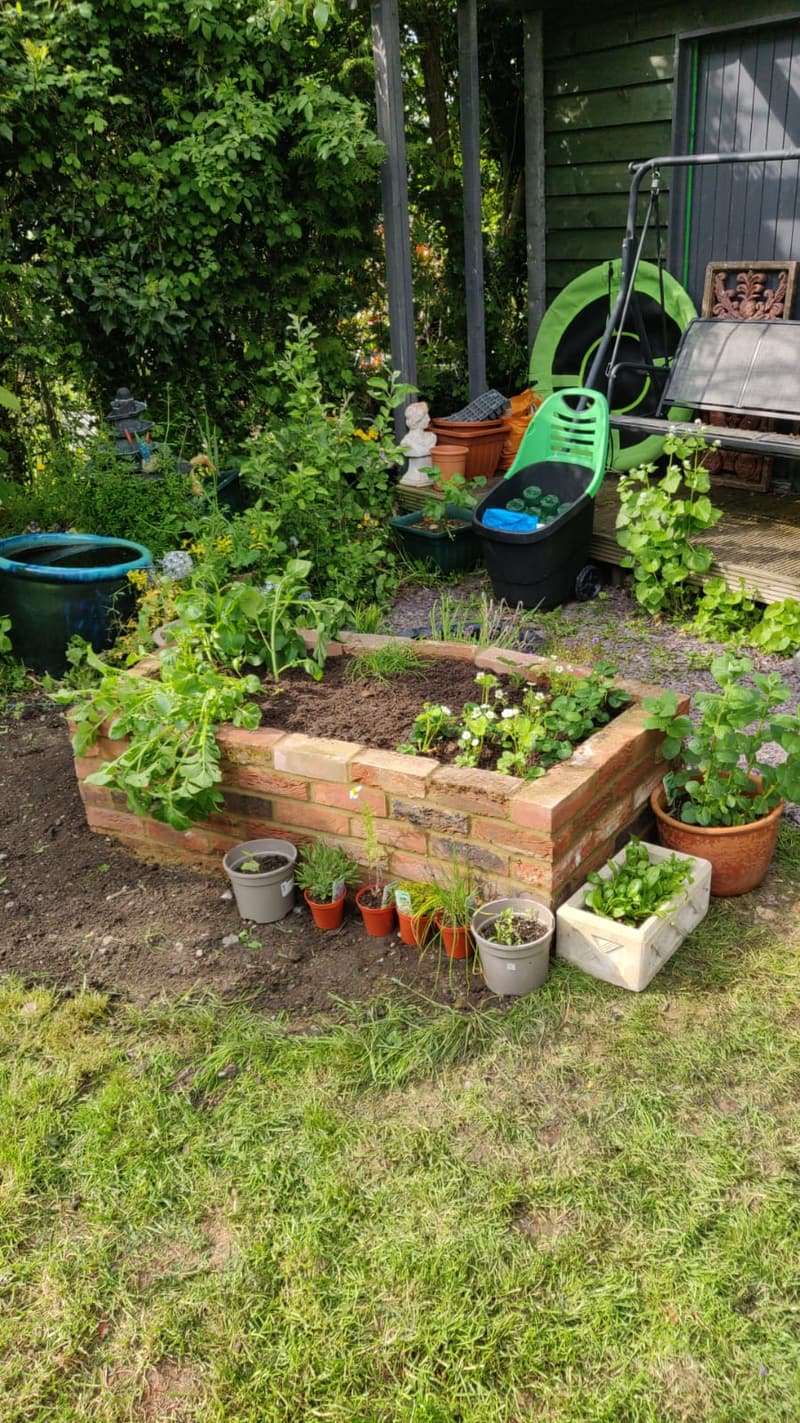
Raised brick planter
May 2023
View the storyQuestions
Landscaping: common questions
What landscaping work do you do?
Hard landscaping: patios, paths, steps, retaining walls, raised beds, gravel areas and block-paved gardens, plus levelling and ground preparation for lawns. [PLACEHOLDER: confirm whether turfing, fencing and planting are offered]
How long does a patio take to lay?
It depends on the size, the access and how much excavation is needed. The porcelain terrace on our projects page was photographed from bare base to finished paving over about a week. We give an expected duration with each quote.
Do I need planning permission for a patio?
Not normally for a patio at ground level in a back garden. Permission can be needed for raised platforms over 300 mm high, for significant terracing or embanking, and for work within the grounds of a listed building.
What is the best paving for a low-maintenance garden?
Porcelain is the easiest to keep clean because it absorbs almost no water. Block paving and gravel over membrane are also low in upkeep. Natural sandstone looks softer but needs an occasional clean.
Can you build the walls as well as the patio?
Yes. We build brick retaining walls, steps, planters and boundary walls as part of the same job, so the brickwork and paving are designed and finished together.
Where we work
Landscaping near you
We are based in Haverhill and cover the towns and villages within about 20 miles.
Get a quote
Planning a patio or garden project?
Call Andrew Martin or send a few details and photos, and we will arrange a visit to look at the job and give you a written quote.
07876 762956